The Importance of a Complete Perspective: Summer 2025 Research Experience for Undergraduates (REU) at the University of Michigan-Flint
My very first exposure to the professional world of academic research in HCI and how it expanded my understanding of UX/UI.
Timeline: SUMMER 2025

Skyler Koba
Posted
1
/
24
/
2026
A New Experience
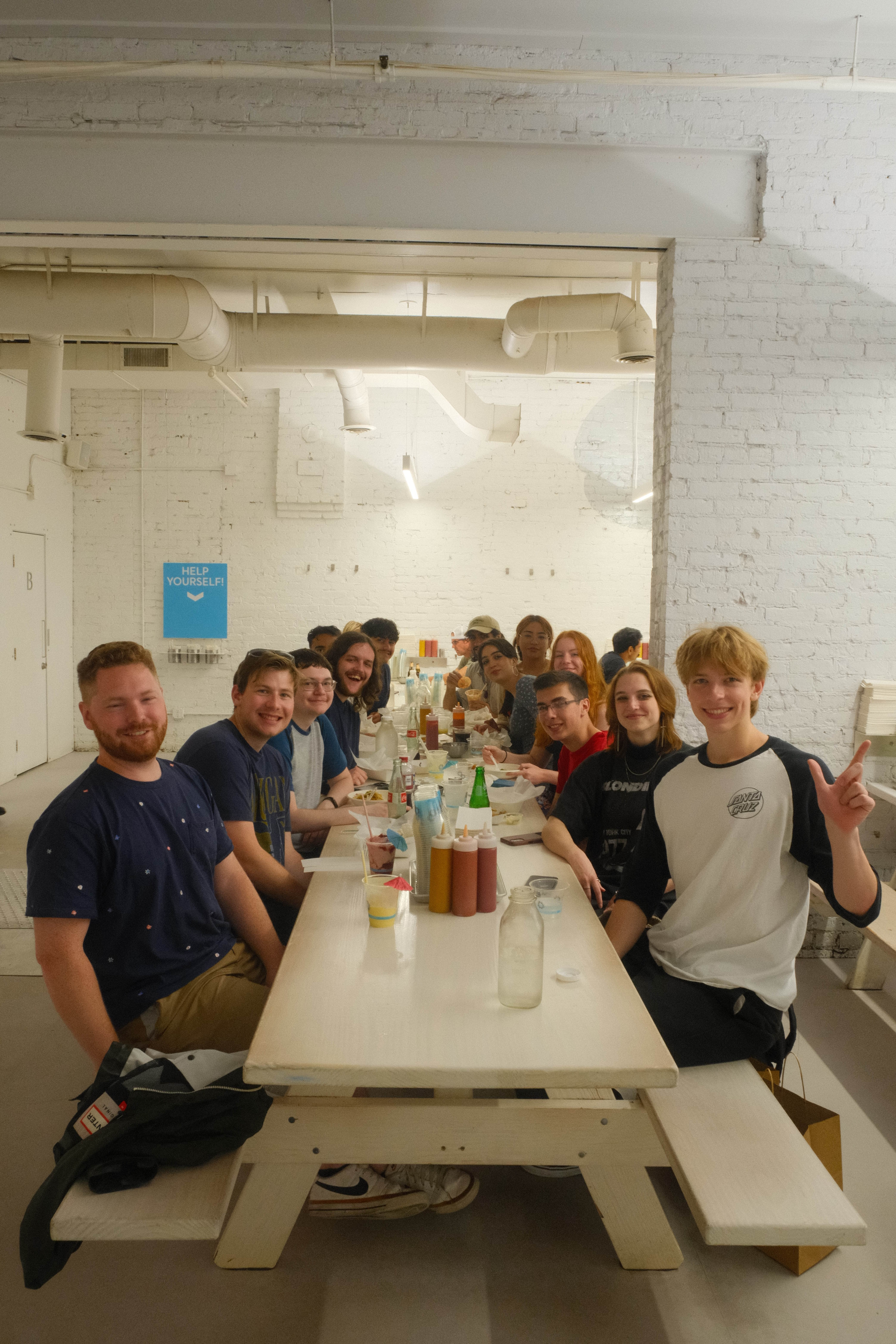
Last May, I was lucky enough to be selected for the National Science Foundation (NSF) REU program at UMICH-Flint. This 10-week program was an opportunity for me to better understand the academic side of Human Computer Interaction (HCI), while also exposing me to interdisciplinary work environments. I had a wonderful time meeting industry professionals and making life-long connections, and it was truly a great learning experience. I know way more about the research and report-writing processes, and in fact, am privileged to be continuing work with my team on new research projects at this very moment.
Our Research: Nuerodivergent User Bases and LLM Technology
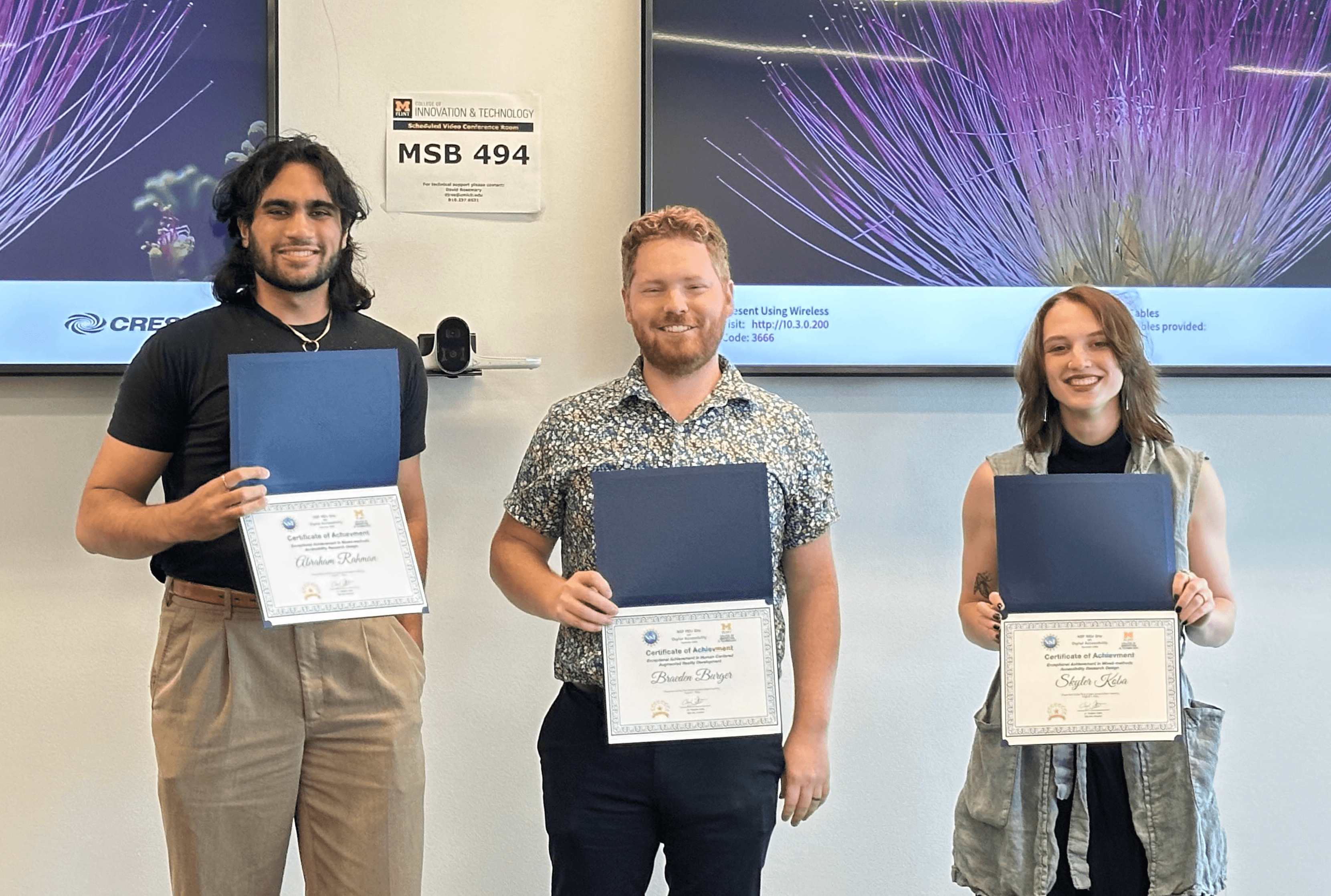
What was our specific research? Well, the REU was comprised of 10 members. Each of us were split into 4 teams with subsequent Primary Investigators (PI's) based on our varying research interests. My team —affectionately named "Pothole" due to the shared road-related grievances of our team members home states— consisted of me, my lab partner Abraham Rahman, and our PI, Dr. Steve Wilson. We elected to work on a research project that sought to answer the question, "How do LLM-generated Q\&A style summaries compare against traditional summary formats regarding the overall reading experience of scientific content for ADHD and Autistic readers?" The goal of our research was to provide generalizable findings to contribute to accessible reading initiatives using improved AI technology. This was not with the intent to replace the need to read the original articles in the future, but to assist readers who might struggle with comprehension due to certain reading formats.
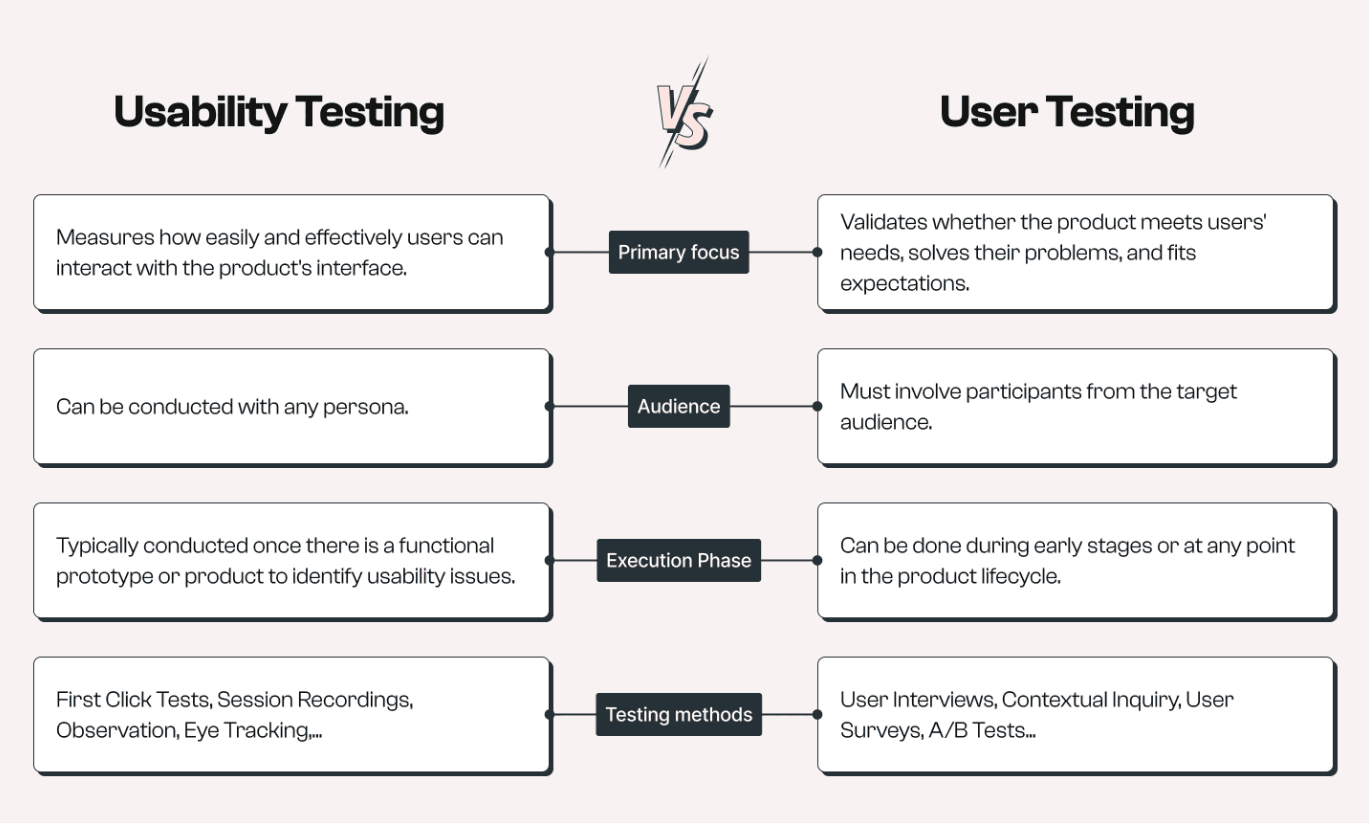
As I was more familiar with usability testing, and less familiar with academic research (which is often associated with user testing), the organization of the project was vastly different than what I was used to. Though we could have chosen to develop a technology that we would essentially do usability testing with, this area of study was fairly niche. So, our team decided to explore the problem space and user requirements before designing and testing a potential solution. Therefore, we opted to develop several test formats against each other in order to better understand how users interact with each format type. This was so that any solutions to be tested in the future could have additional context of our user groups.
As our goals prioritized HCI communities over Machine Learning Developer communities, our steps consisted of processes that were otherwise foreign to me before the program. This included (1) conducting in-depth, relevant literary analysis specifically for our future report, (2) choosing HCI-specific research methodologies and recruitment tools, and (3) submitting our studies for IRB review.
Project Difficulties
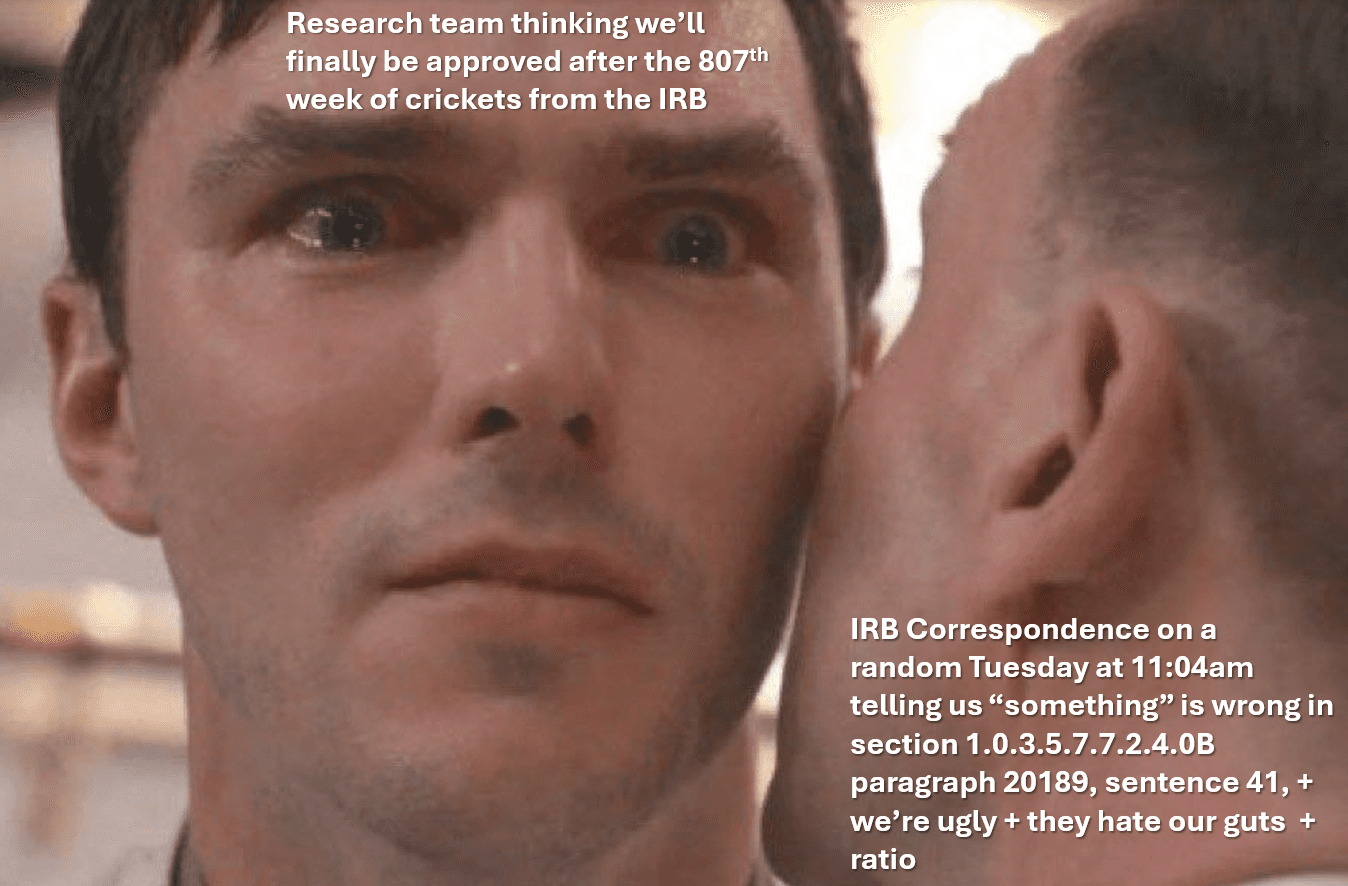
The countless jokes online are not wrong: the IRB was definitely a struggle. Since our team decided to conduct two studies — an interview-based precursory study and a survey-based quantitative study — we had to fill out the IRB information twice. TWICE! The first time met our expectations as first-time IRBers; wildly confusing and convuluted. The second time went by much faster; however, the IRB correspondence was a real headache, and our approval didn't come until much later than we expected. This caused a bump in our projected timeline, especially regarding our initial plans for writing the report.
Punctual IRB processes weren't our only setback. Over the course of the project, we often had to go back and revise our plans for our studies. In fact, majority of the middle of the program was dedicated to this revision process as we tested and re-evaluated with our PI and other advisory parties.
Among the tedious nature of this planning and revision process, I tended to take on the more technical side of work: setting up the survey on Qualtrics and survey logic, creating the shared participant workspace on Figma, and double, triple, quadruple checking the Prolific advertisements (including approval and rejection management).
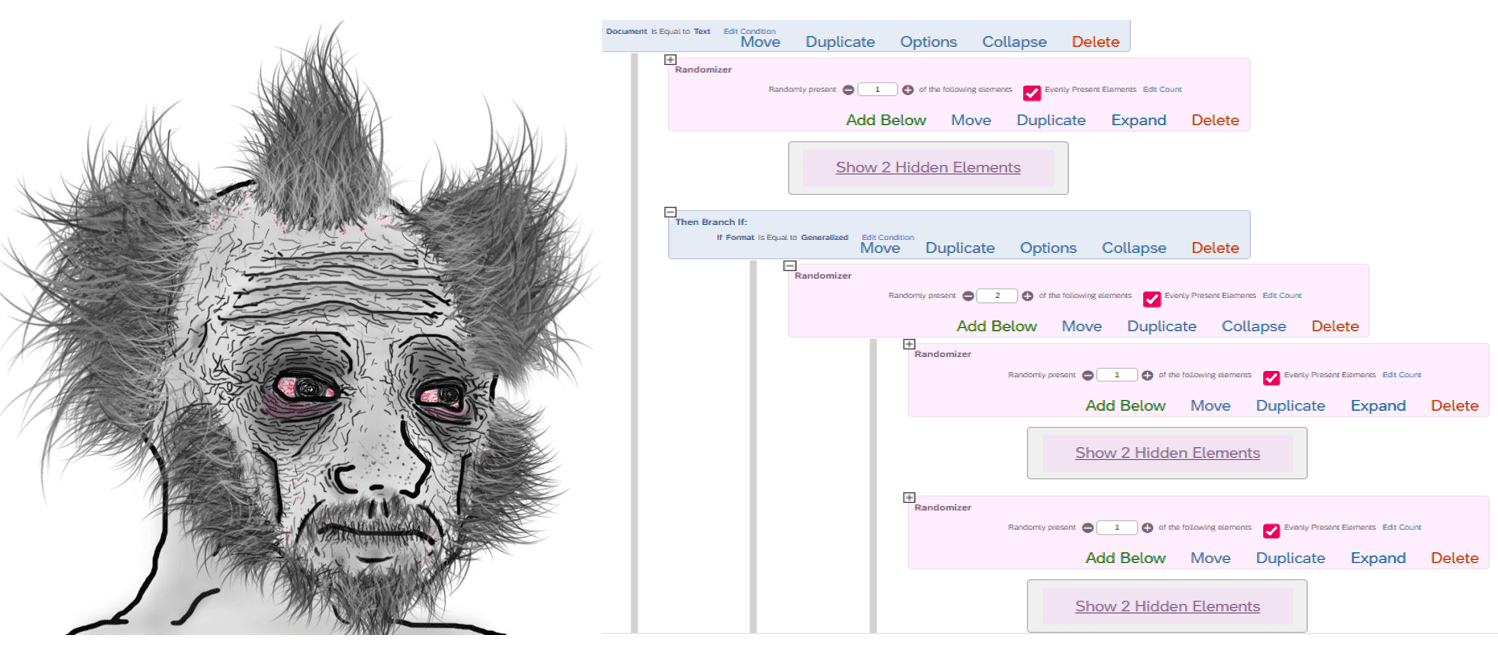
I don't mean to make this sound like it was the end of the world —I took on these responsibilities by choice because I enjoy organization and detail-oriented problem solving. This was how our team was naturally balanced: I took on more technical and project management-related tasks while my partner, Abraham, took on the more abstract pieces and bigger picture items (i.e., continual literary analysis and report examples, ANOVA & Data gathering references, breaking down communication issues). However, as someone with a background in design principles and effective user interface design, I did end up developing an aversion to the survey logic UI on Qualtrics.
An important struggle of note, though, actually happened during the precursory study. I had thought that I had prepped everything I possibly could -but of course, that's an impossible thing to do.
During my first session with a participant, a major technical undersight was revealed; the technology wasn't letting the participate edit. Since this was a crucial tool for the study, I had to quickly think of a solution. Luckily, I did manage to figure it out by transfering materials onto a FigJam board. But, it did extend the participants session time by nearly an hour. Fortunately, the participant was very patient with me, and I did make sure to compensate them as necessary for the error.
Ultimately this confirmed for me that no matter how much planning you do, you can't plan for every potential scenario. While planning for potential mishaps is a crucial part of project management and project maintenence, nobody can see into the future. What it taught me was that the ability to adapt and problem solve in the moment is a crucial skillset to have in any career. And overall, I'm glad that when the ground fell out from under me, I was able to do just that.
What's Next?
Well, we submitted to the renowened HCI conference, CHI, in September — and got rejected. Our initial plan was to dedicate the entire month of August to writing the report. However, our buffer period did not account for prolonged data gathering, data analysis, and personal life events. By the time of the deadline, our entire team had stayed up until 6am at least (for one reason or another), and in the end, we submitted what we had, rubbed our blood-shot eyes, and hoped for the best. When we got the notice for rejection, I was very sad. Although I tried to be realistic about it (since it was my very first time writing and submitting a research paper), I was still very affected in the moment. To be honest, I cried pretty hard. But it didn't change the fact that I was happy that I did it at all, and infinitely proud of the work that we did.
Though we were rejected from CHI, this did not disuade us. After some chats with Dr. Wilson and analysis of the reviewers notes on our report, our team decided that we would revise our paper and submit to the ASSETS Conference 2026.
Ever since we got the news in November, our team has been working diligently on our plans for revision, taking the advice of the previous reviews and adding our new perspectives. Additionally, my lab partner, Abraham, applied to and won a grant from his college, Clark University, to work on research that expands on a similar area of study. To be more specific, this new project focuses on the research question, "How do individual differences in emotion regulation relate to self-reported cognitive load when reading AI-generated scientific summaries of complex scientific material?" The research team formed for this endeavor includes Abraham, me, and Dr. Steve Wilson as an external advisor, as well as Clark undergraduate Preeti Bachu and Professor Michael Miller as acting PI.
Takeaways
What did I learn from this experience? Well mostly, I learned that I don't just want to settle on either research or design— I want to experience the whole lifecycle of a product, from start to finish. After a lot of consideration, I believe exploring more work in Software Development and Project Management, in addition to UX/UI work, would give me a lot of personal and professional satisfaction.
Overall, I'm extremely happy that I had this opportunity, not only for the professional experience I got from it, but also because of the unforgettable friendships and memories I formed during my time there. Nothing could make me happier than continuing to work with my team, and I'm excited to carry this new endeavor into the future!
Interested in our most recent project? Check out the AI grant acceptance news through the below link!